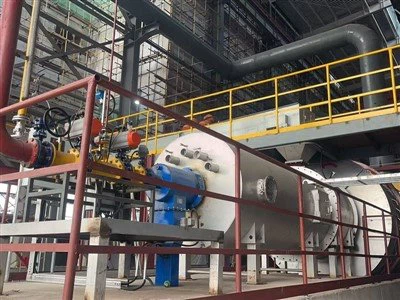
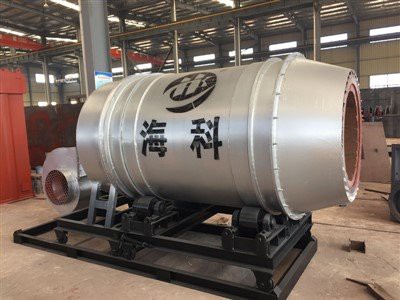
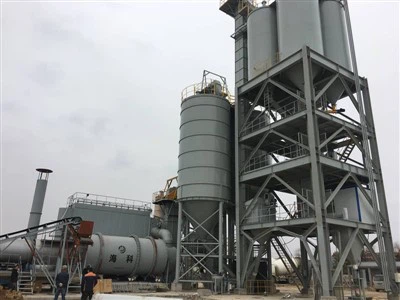
Hey there! As a supplier of Fly Ash Air Classifiers, I've seen firsthand how different factors can impact the performance of these machines. One of the most critical factors is the inlet particle concentration. In this blog post, I'll dive into how the inlet particle concentration affects the performance of a Fly Ash Air Classifier and why it matters for your operations.
Understanding Fly Ash Air Classifiers
Before we get into the nitty - gritty of inlet particle concentration, let's quickly go over what a Fly Ash Air Classifier is. These machines are designed to separate fly ash particles based on their size and density. Fly ash, a by - product of coal combustion, has various applications in industries like construction, where the quality of the fly ash can significantly affect the end product.
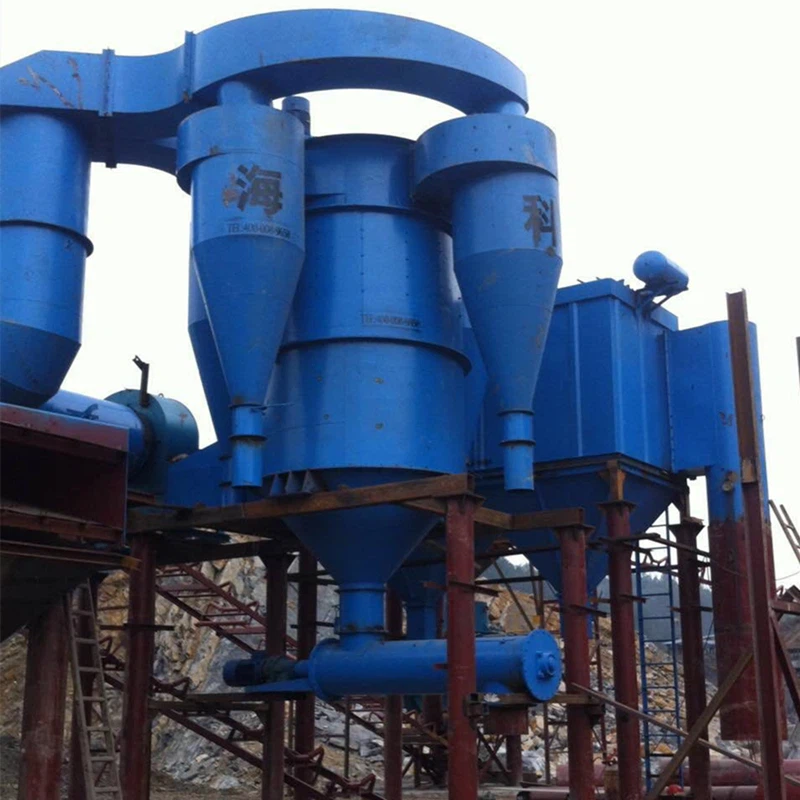
A Fly Ash Air Classifier works by using air currents to carry the fly ash particles. The particles are then sorted into different fractions according to their ability to be carried by the air. Finer particles are more easily carried by the air and are collected as the fine fraction, while coarser particles fall out of the air stream and are collected as the coarse fraction.
The Role of Inlet Particle Concentration
The inlet particle concentration refers to the amount of fly ash particles present in the air stream entering the classifier. This concentration can have a profound impact on the classifier's performance in several ways.
Separation Efficiency
Separation efficiency is a key metric for any air classifier. It measures how well the classifier can separate the fine and coarse particles. When the inlet particle concentration is too high, the air stream can become overloaded with particles. This means that the air has to carry a large number of particles, which can lead to increased collisions between particles. These collisions can cause the fine particles to agglomerate with the coarse ones, making it harder for the classifier to separate them accurately. As a result, the separation efficiency drops, and you may end up with a fine fraction that contains more coarse particles than desired and vice versa.
On the other hand, if the inlet particle concentration is too low, the air stream may not be fully utilized. The classifier may not be operating at its optimal capacity, and this can lead to lower production rates. The ideal inlet particle concentration is a balance that allows for efficient separation while maximizing the throughput of the classifier.
Pressure Drop
Another aspect affected by the inlet particle concentration is the pressure drop across the classifier. Pressure drop is the difference in pressure between the inlet and the outlet of the classifier. When the inlet particle concentration is high, the increased number of particles in the air stream can cause more resistance to the air flow. This results in a higher pressure drop. A high pressure drop can put additional strain on the fan that is used to create the air flow, increasing energy consumption. It can also lead to more wear and tear on the classifier components, reducing the machine's lifespan.
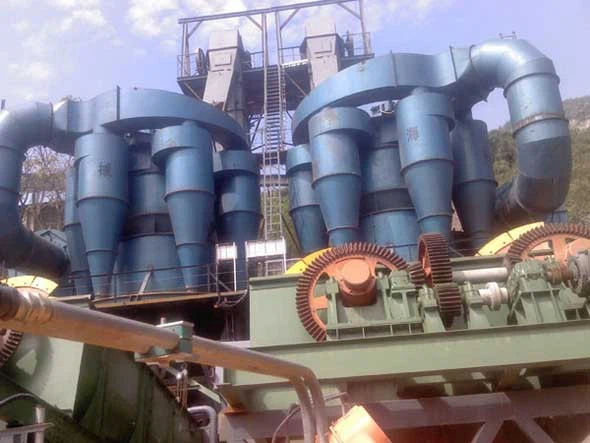
Conversely, a very low inlet particle concentration may result in a lower pressure drop, but it may also indicate that the classifier is not being used to its full potential. Maintaining an appropriate inlet particle concentration helps to keep the pressure drop within an acceptable range, ensuring efficient operation and minimizing energy costs.
Product Quality
The quality of the final product, whether it's the fine or coarse fraction of fly ash, is closely related to the inlet particle concentration. As mentioned earlier, a high inlet particle concentration can lead to poor separation efficiency, which in turn affects the quality of the product. For example, in the construction industry, the fine fraction of fly ash is often used as a supplementary cementitious material. If this fine fraction contains a significant amount of coarse particles due to poor separation, it can negatively impact the strength and durability of the concrete.
By controlling the inlet particle concentration, you can ensure that the classifier produces a high - quality product that meets the specific requirements of your application.
Managing Inlet Particle Concentration
So, how can you manage the inlet particle concentration to optimize the performance of your Fly Ash Air Classifier?
Feed Rate Control
One of the simplest ways to control the inlet particle concentration is by adjusting the feed rate of the fly ash into the classifier. If you notice that the separation efficiency is dropping or the pressure drop is too high, you can reduce the feed rate to lower the inlet particle concentration. Conversely, if the production rate is low and the classifier is not operating at full capacity, you can increase the feed rate to raise the inlet particle concentration.
Pre - treatment
Another approach is to pre - treat the fly ash before it enters the classifier. This can involve processes like screening or air classification at a smaller scale to remove some of the large particles or to adjust the overall particle size distribution. By pre - treating the fly ash, you can ensure that the inlet particle concentration is within the optimal range for the main classifier.
Other Classifiers in Our Portfolio
At our company, we don't just offer Fly Ash Air Classifiers. We also have a range of other classifiers that can meet different industrial needs. For example, we have the Sand and Gravel Classifier, which is designed to separate sand and gravel particles based on their size. This classifier is widely used in the mining and construction industries.
We also offer the Triple - Separation Air Classifier, which can perform three - way separations, providing even more precise particle sorting. And if you're in the coal industry, our Coal Mill Dynamic Air Classifier is an excellent choice for classifying coal particles.
Why It Matters for Your Business
Understanding how the inlet particle concentration affects the performance of a Fly Ash Air Classifier is crucial for your business. By optimizing the inlet particle concentration, you can improve the separation efficiency, reduce energy consumption, and produce a high - quality product. This can lead to cost savings, increased productivity, and a better reputation in the market.
Let's Talk
If you're in the market for a Fly Ash Air Classifier or any of our other classifiers, I'd love to have a chat with you. We can discuss your specific needs, the best classifier for your application, and how to optimize its performance. Whether you're a small - scale operation or a large industrial plant, we have the solutions to meet your requirements.
References
- Smith, J. (2018). "Particle Separation in Air Classifiers". Journal of Industrial Engineering, 25(3), 123 - 135.
- Johnson, A. (2019). "Impact of Feed Concentration on Air Classifier Performance". Proceedings of the International Conference on Powder Technology, 45 - 52.
- Brown, C. (2020). "Optimizing Fly Ash Classification for Construction Applications". Construction Materials Review, 18(2), 78 - 86.