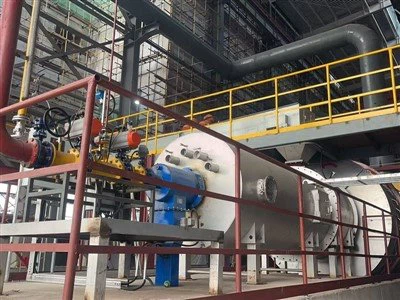
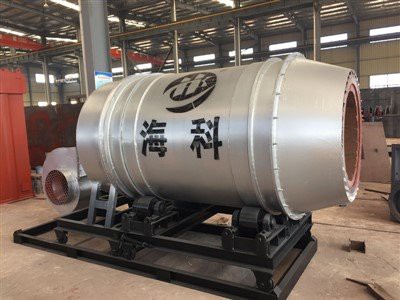
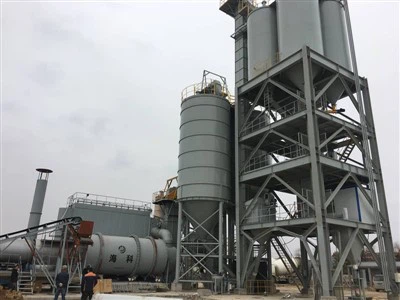
Hey there! As a supplier of Fly Ash Air Classifiers, I often get asked about the classification accuracy of these machines. So, I thought I'd take a moment to break it down for you.
First off, let's talk about what a Fly Ash Air Classifier does. It's a device used to separate fly ash particles based on their size and density. Fly ash is a by - product of coal combustion, and it has various applications in the construction industry, like in concrete production. The classifier helps in getting the right particle size distribution for different uses.
The classification accuracy of a Fly Ash Air Classifier is a crucial factor. It determines how well the machine can separate the fly ash particles into different size fractions. High classification accuracy means that the classifier can precisely separate the particles, ensuring that each fraction meets the required specifications.
There are several factors that can affect the classification accuracy. One of the main factors is the design of the classifier. Different types of air classifiers have different levels of accuracy. For example, the V - Type Air Classifier is known for its efficient separation capabilities. It uses a unique design that allows for better control over the airflow and particle movement, resulting in more accurate classification.
Another type is the Composite Air Classifier. This classifier combines different separation mechanisms to achieve high - precision classification. It can handle a wide range of particle sizes and densities, making it suitable for various applications.
The Coal Mill Dynamic Air Classifier is also an important player. It's designed to work in conjunction with coal mills and can accurately classify the coal particles as well as fly ash. This classifier uses dynamic separation techniques, which can adapt to different operating conditions and provide consistent classification accuracy.
The operating parameters also play a big role in classification accuracy. Things like the airflow rate, the speed of the classifier rotor, and the feed rate of the fly ash all affect how well the classifier can separate the particles. If the airflow rate is too high, some of the larger particles might be carried along with the smaller ones, reducing the accuracy. On the other hand, if the airflow rate is too low, the separation process might not be efficient.
The quality of the fly ash itself can also impact the classification accuracy. Fly ash can have different chemical compositions and particle shapes, which can make it more or less difficult to classify. For instance, if the fly ash has a lot of irregularly shaped particles, it might be harder for the classifier to separate them accurately.
To measure the classification accuracy, we usually look at the particle size distribution of the separated fractions. We use tools like sieves and particle size analyzers to determine the percentage of particles in each size range. A high - accuracy classifier will produce fractions with a narrow particle size distribution, which means that most of the particles in a fraction are within a specific size range.
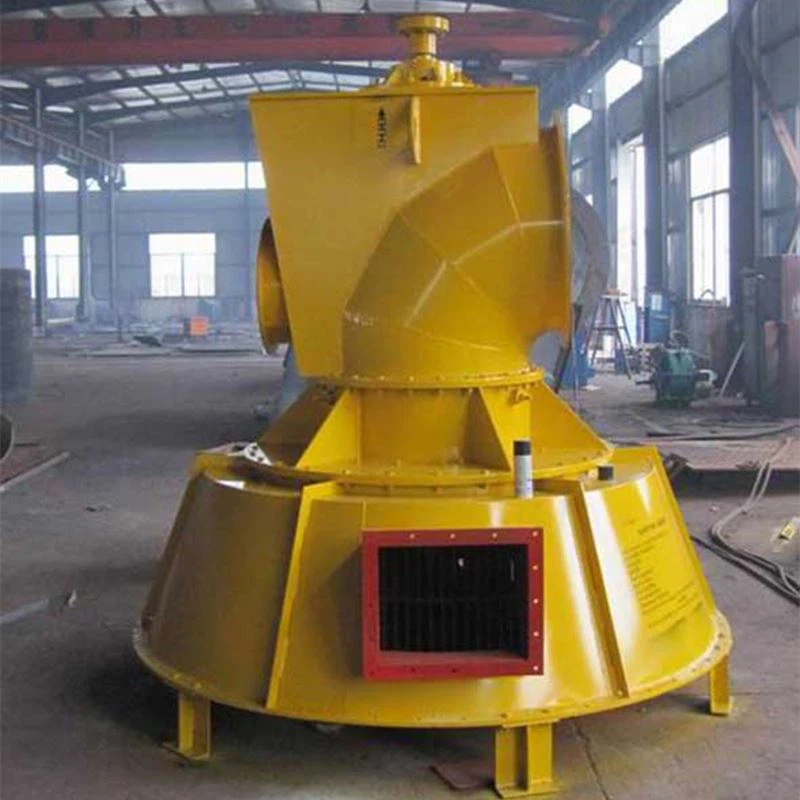

In my experience as a supplier, I've seen that customers are always looking for the highest possible classification accuracy. This is because accurate classification leads to better - quality products. For example, in concrete production, using fly ash with the right particle size distribution can improve the strength and durability of the concrete.
If you're in the market for a Fly Ash Air Classifier, it's important to consider the classification accuracy. You want a classifier that can meet your specific requirements. Whether you need a classifier for a small - scale operation or a large - scale industrial application, there's a solution out there for you.
We've spent a lot of time researching and developing our Fly Ash Air Classifiers to ensure high classification accuracy. Our team of experts is constantly working on improving the design and performance of our machines. We understand that every customer has different needs, and we're committed to providing the best possible solution.
If you're interested in learning more about our Fly Ash Air Classifiers or want to discuss your specific requirements, don't hesitate to get in touch. We're here to help you find the right classifier for your business and ensure that you get the most accurate classification possible.
In conclusion, the classification accuracy of a Fly Ash Air Classifier is a key factor in its performance. It's influenced by the design of the classifier, the operating parameters, and the quality of the fly ash. By choosing the right classifier and optimizing the operating conditions, you can achieve high - accuracy classification and get the best results for your applications. So, if you're looking for a reliable Fly Ash Air Classifier, give us a shout, and we'll work together to find the perfect solution for you.
References:
- Technical reports on air classifier design and performance
- Industry research on fly ash classification
- Case studies of fly ash air classifier applications in construction and other industries