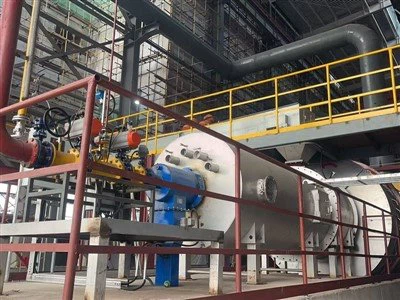
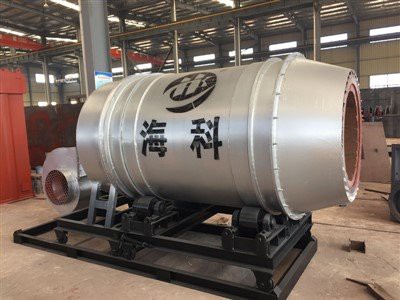
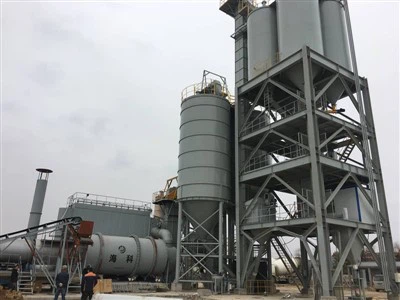
Hey there! As a supplier of Dual - Rotor Air Classifiers, I'm super stoked to dig deep into the particle dispersion mechanism in these amazing machines. So, let's get right into it.
What's a Dual - Rotor Air Classifier Anyway?
Before we jump into the dispersion mechanism, let's quickly talk about what a Dual - Rotor Air Classifier is. It's a high - tech piece of equipment that's used to separate particles based on their size, shape, and density. It's got two rotors that work together to create a complex airflow pattern, which helps in classifying particles. You can check out more about it on our Dual - Rotor Air Classifier page.
The Basics of Particle Dispersion
Particle dispersion is all about how particles spread out in a fluid (in this case, air). In a Dual - Rotor Air Classifier, the goal is to disperse particles evenly so that they can be accurately classified. When particles enter the classifier, they are subjected to various forces, including aerodynamic forces, centrifugal forces, and gravitational forces.
The first step in the particle dispersion process is the introduction of particles into the classifier. This is usually done through a feed inlet. Once the particles are inside, they are immediately caught up in the airflow created by the rotors. The rotors spin at high speeds, creating a strong centrifugal force that pushes the particles towards the outer edges of the classifier.
The Role of Airflow
Airflow plays a crucial role in particle dispersion. The air flowing through the classifier carries the particles along and helps to separate them based on their size and density. The two rotors in the Dual - Rotor Air Classifier create a complex airflow pattern. The inner rotor creates a high - speed airflow that helps to break up particle agglomerates and disperse the particles more evenly. The outer rotor, on the other hand, creates a slower - moving airflow that helps to guide the particles towards the classification zone.
The interaction between the two rotors and the airflow is what makes the Dual - Rotor Air Classifier so effective at particle dispersion. The high - speed airflow from the inner rotor ensures that the particles are well - dispersed, while the slower - moving airflow from the outer rotor helps to control the movement of the particles and direct them towards the appropriate classification outlet.
Centrifugal Force and Particle Separation
Centrifugal force is another key factor in the particle dispersion mechanism. As the rotors spin, they create a centrifugal force that acts on the particles. Larger and heavier particles are more affected by the centrifugal force and are pushed towards the outer edges of the classifier. Smaller and lighter particles, on the other hand, are less affected by the centrifugal force and tend to stay closer to the center of the classifier.
This difference in the behavior of particles based on their size and density allows for effective particle separation. The classifier is designed with different outlets for different particle sizes. The larger particles are collected at the outer outlets, while the smaller particles are collected at the inner outlets.

Agglomerate Breakup
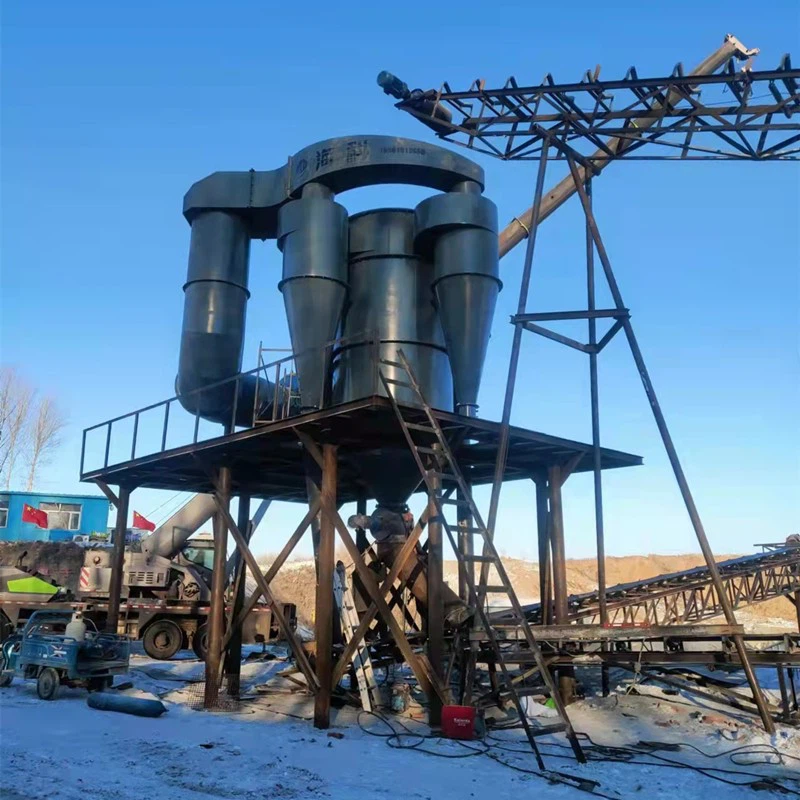
Particle agglomerates are groups of particles that stick together. In a Dual - Rotor Air Classifier, it's important to break up these agglomerates to ensure accurate particle dispersion and classification. The high - speed airflow created by the inner rotor helps to break up the agglomerates. The force of the airflow is strong enough to overcome the forces holding the particles together in the agglomerates.
Once the agglomerates are broken up, the individual particles can be more easily dispersed and classified. This is crucial for applications where accurate particle size distribution is required, such as in the production of pharmaceuticals, ceramics, and chemicals.
Applications of Dual - Rotor Air Classifiers
Dual - Rotor Air Classifiers have a wide range of applications. They are commonly used in industries such as mining, cement, and food processing. In the mining industry, they are used to separate valuable minerals from waste materials. In the cement industry, they are used to classify cement particles to ensure consistent quality. And in the food processing industry, they are used to separate different types of food particles based on their size and density.
If you're involved in the sand and gravel industry, you might be interested in our Sand and Gravel Classifier. It's specifically designed to handle the unique requirements of sand and gravel classification.
Comparison with Other Classifiers
There are other types of air classifiers available in the market, such as the Composite Air Classifier. You can learn more about it on our Composite Air Classifier page. While each type of classifier has its own advantages, the Dual - Rotor Air Classifier offers some unique benefits.
The dual - rotor design allows for better particle dispersion and more accurate classification. The complex airflow pattern created by the two rotors helps to ensure that particles are well - dispersed and separated based on their size and density. This results in a higher quality product and better overall performance.
Why Choose Our Dual - Rotor Air Classifiers
As a supplier, we take pride in offering high - quality Dual - Rotor Air Classifiers. Our classifiers are designed with the latest technology and are built to last. We use high - quality materials and advanced manufacturing processes to ensure that our products meet the highest standards of quality and performance.
We also offer excellent customer support. Our team of experts is always available to answer your questions and provide you with the support you need. Whether you're looking for technical advice or help with installation and maintenance, we've got you covered.
Wrapping Up and Invitation to Connect
So, there you have it! That's a detailed look at the particle dispersion mechanism in a Dual - Rotor Air Classifier. If you're in the market for a high - quality air classifier, we'd love to hear from you. Whether you're in the mining, cement, food processing, or any other industry that requires accurate particle classification, our Dual - Rotor Air Classifiers can meet your needs.
Don't hesitate to reach out to us to discuss your specific requirements and explore how our products can benefit your business. We're here to help you make the right choice and ensure that you get the best results.
References
- Smith, J. (2018). Particle Classification Technology. Elsevier.
- Johnson, A. (2020). Air Classifier Design and Operation. Wiley.