When it comes to the production of dry mortar, a crucial step is the drying process. The right dry mortar dryer can significantly impact the quality and efficiency of dry mortar production. As a dry mortar dryer supplier, I'm here to introduce you to the different types of dry mortar dryers available in the market.
Rotary Dryer
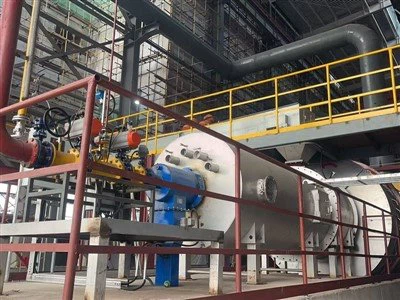
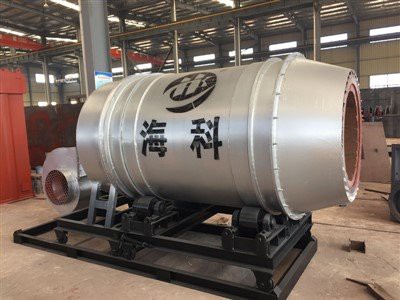
The rotary dryer is one of the most commonly used dryers in the dry mortar industry. It consists of a rotating drum that is slightly inclined. The wet material is fed into the drum from the higher end, and as the drum rotates, the material moves towards the lower end. Hot air is introduced into the drum, either co - currently or counter - currently with the material flow.
The advantage of a rotary dryer is its high throughput capacity. It can handle large volumes of wet material, making it suitable for large - scale dry mortar production plants. It also has a relatively simple structure, which means lower maintenance costs. Additionally, the rotating action of the drum ensures good contact between the material and the hot air, resulting in efficient drying.
However, rotary dryers also have some limitations. They are relatively large in size and require a significant amount of floor space. They also consume a considerable amount of energy, especially when drying materials with high moisture content.
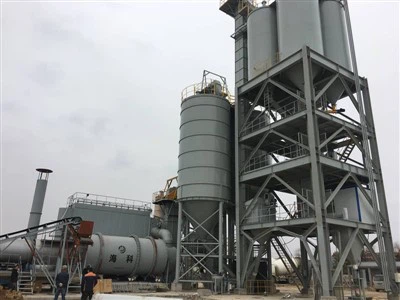
For more information on dry mortar production lines that may include rotary dryers, you can visit our Dry Mortar Sand Making Line page.
Fluidized Bed Dryer
A fluidized bed dryer operates on the principle of fluidization. In this type of dryer, hot air is blown through a perforated plate, causing the wet material to be suspended in the air, creating a fluid - like state. The hot air provides the heat necessary for drying the material.
One of the main advantages of a fluidized bed dryer is its high heat transfer efficiency. The fluidized state of the material ensures that each particle is in direct contact with the hot air, leading to rapid and uniform drying. It also has a relatively short drying time compared to other dryers.
Fluidized bed dryers are suitable for drying fine - grained materials. They are also easy to control, as the flow rate of the hot air and the temperature can be adjusted precisely. However, they may not be suitable for materials that are prone to agglomeration, as the fluidization process may be disrupted.
If you are interested in the equipment used in dry mortar production, our Dry Mortar Mixer page provides more details on related components.
Flash Dryer
Flash dryers are designed for rapid drying of materials. In a flash dryer, the wet material is introduced into a high - velocity hot air stream. The hot air quickly evaporates the moisture from the material as it is carried through the drying tube.
The main advantage of a flash dryer is its extremely fast drying speed. It can dry materials in a matter of seconds, making it ideal for continuous production processes. Flash dryers are also compact in size, requiring less floor space compared to rotary dryers.
However, flash dryers have some limitations. They are mainly suitable for materials with low to medium moisture content. If the moisture content is too high, the drying efficiency may be reduced. Also, the high - velocity air stream may cause some material loss if not properly designed.
Our Dry Mortar Dryer page offers in - depth information about different types of dryers and their applications in dry mortar production.


Tray Dryer
Tray dryers are a simple and cost - effective option for small - scale dry mortar production. In a tray dryer, the wet material is placed on trays, which are then stacked in a drying chamber. Hot air is circulated through the chamber to dry the material.
The advantage of a tray dryer is its simplicity. It is easy to operate and maintain, and it can be customized to meet different production requirements. Tray dryers are also suitable for drying heat - sensitive materials, as the drying temperature can be easily controlled.
However, tray dryers have a relatively low throughput capacity compared to other types of dryers. The drying process is also relatively slow, as the material is stationary on the trays.
Selection Considerations
When choosing a dry mortar dryer, several factors need to be considered. The first is the moisture content of the raw material. If the material has a high moisture content, a dryer with high drying capacity, such as a rotary dryer, may be more suitable.
The particle size of the material is also important. Fine - grained materials may be better dried using a fluidized bed dryer or a flash dryer, while larger particles may require a rotary dryer.
The production scale is another crucial factor. For large - scale production, high - throughput dryers like rotary dryers are preferred, while small - scale operations may find tray dryers more cost - effective.
Energy consumption is also a significant consideration. In today's energy - conscious world, choosing a dryer with low energy consumption can help reduce production costs.
Conclusion
As a dry mortar dryer supplier, we understand the importance of choosing the right dryer for your specific needs. Each type of dryer has its own advantages and limitations, and the selection should be based on factors such as moisture content, particle size, production scale, and energy consumption.
If you are in the market for a dry mortar dryer or have any questions about our products, we encourage you to contact us for a detailed discussion. Our team of experts is ready to assist you in finding the most suitable dryer for your dry mortar production process.
References
- Perry, R. H., & Green, D. W. (1997). Perry's Chemical Engineers' Handbook. McGraw - Hill.
- Mujumdar, A. S. (2007). Handbook of Industrial Drying. CRC Press.