


Dry Mortar Production Lines
Product Overview
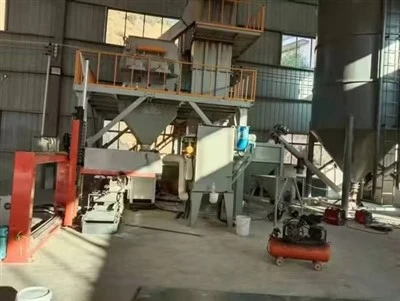
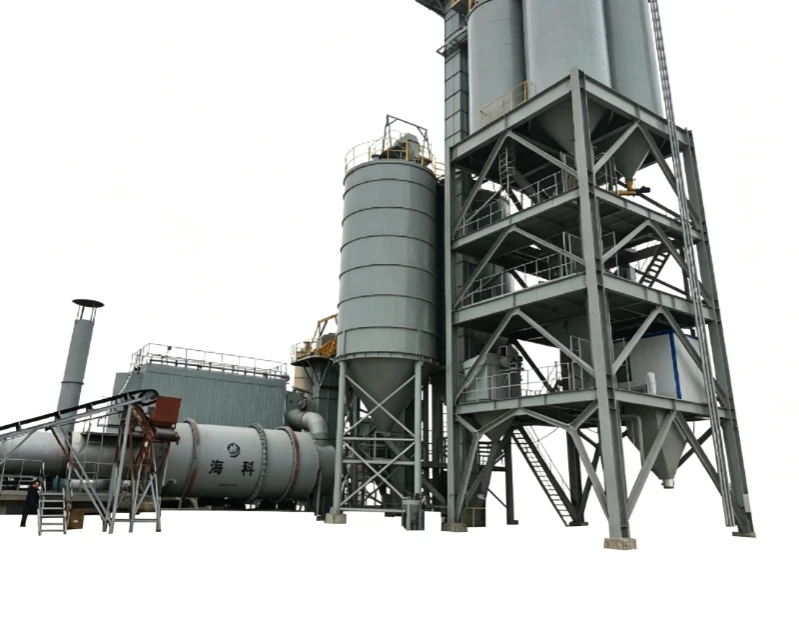
This industrial dry mortar production line is engineered for the continuous, automated batching, mixing, and packaging of dry-mix building mortars. Operating on a modular framework, the system handles bulk raw materials—including sand, cement, fly ash, and micro-additives—with precision metering to yield consistent formulations for masonry, plastering, tile adhesives, and self-leveling floor compounds.
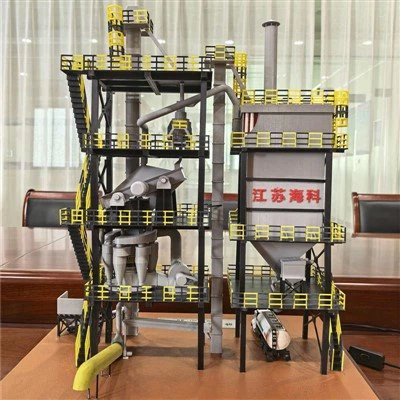
Designed for heavy industrial environments, the plant integrates pneumatic conveying, gravimetric batching, twin-shaft homogenization, and automated valve-bag/open-mouth bagging units. Available in capacities ranging from 10 to 100 tons per hour, it accommodates both tower-type layouts for maximum space efficiency and linear configurations for lower ceiling clearances.
Engineering Resource Note: Plant managers and project engineers can request complete 2D/3D plant layout CAD drawings and detailed PDF datasheets via the inquiry section below.


Gravimetric Micro-Batching Accuracy
Multi-scale weighing hoppers isolate main aggregates from minor additives, achieving a batching precision of +/- 0.2% for cement and +/- 0.05% for chemical additives to safeguard strict formulation integrity.
High-Homogeneity Mixing Core
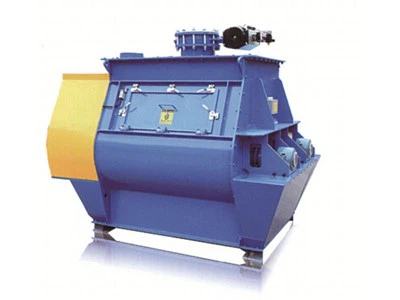
Twin-shaft paddle mixers generate a fluidization zone with counter-rotating counter-weighted paddles, achieving a coefficient of variation (CV) < 3% within a 60 to 90-second mixing cycle.
Sealed Dust-Extraction Architecture
Negative-pressure pulse-jet bag filters are positioned at high-emission junctions (crushing, screening, mixing, and packing), maintaining workplace dust emission levels below 10 mg/m3.
Modular Plant Layout
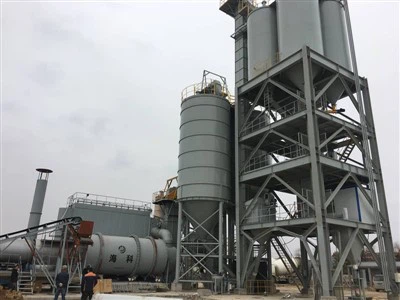
Scalable tier-based structures allow seamless integration of raw material silos, drying units, and screening modules according to site-specific footprint constraints.
PLC-Centric Automated Control
Industrial Siemens/Schneider PLC control suites with SCADA visualization monitor real-time load cell signals, pneumatic valve states, and motor amperages with manual override capabilities.
Main Components
Process Flow Sequence: Raw Material Silos -> Bucket Elevators / Screw Conveyors -> Vibrating Screens -> Weighing Hoppers -> Twin-Shaft Paddle Mixer -> Finished Product Surge Hopper -> Valved/Open-Mouth Packaging Machine & Palletizing System.
Storage Silos & Bulk Feeding Systems: Welded or bolted steel silos equipped with fluidization pads, bin activators, and rotary valves to prevent bridging and ensure mass flow of aggregates and binders.
Batching & Weighing Section: Independent weigh hoppers suspended on high-precision compression load cells, connected to pneumatic butterfly valves for fast-feed and dribble-feed control.
Twin-Shaft Paddle Mixer (Core Unit): Heavy-duty mixing trough featuring wear-resistant Hardox alloy steel linings, adjustable high-chrome cast iron paddle tips, and dual shaft end seals with air-purge barriers. (Visual Verification,Request high-resolution interior photos of mixer housing and wear-resistant paddles)
Screening & Grading Unit: Rotary or linear vibrating screens remove oversize debris and agglomerates from raw sand prior to batching.
Packaging & Palletizing Suite: Automated valve-bag packers with ultrasonic/impulse sealing or gravity packers for valve sacks, coupled with robotic or layer-push palletizers.
Dust Collection Network: Centralized pulse-jet baghouse filters coupled with high-efficiency centrifugal exhaust fans.
Technical Specifications
|
Technical Parameter |
Semi-Automatic Line (Small Scale) |
Standard Automated Line |
Heavy-Duty Tower Plant |
|
Hourly Capacity (t/h) |
5 - 15 |
20 - 50 |
60 - 100+ |
|
Batching Precision |
Main: +/- 0.5% |
Additive: +/- 0.2% |
Main: +/- 0.3% |
|
Mixing Time per Batch |
120 - 180 s |
90 - 120 s |
60 - 90 s |
|
Installed Power (kW) |
45 - 90 |
110 - 250 |
300 - 550+ |
|
Compressed Air Requirement |
0.8 m3/min (0.6 MPa) |
2.5 m3/min (0.6 MPa) |
5.0+ m3/min (0.6 MPa) |
|
Required Plant Height (m) |
6 - 8 |
12 - 16 |
22 - 28 |
|
Primary Mixer Model |
Single-Shaft Ribbon / Small Paddle |
Twin-Shaft Paddle (500L - 2000L) |
Twin-Shaft Paddle (3000L - 4000L) |
|
Dust Emission Rate |
< 20 mg/m3 |
< 10 mg/m3 |
< 10 mg/m3 |
Masonry Mortar (M-Class): Bricklaying and block jointing mortars requiring uniform compressive strength and workability retention.
Plastering & Rendering Mortar: Internal and external wall renders formulated for crack resistance and strong substrate adhesion.
Tile Adhesives (C1/C2 Classes): Polymer-modified tile bonding mortars requiring precise ratios of cellulose ethers, RDP (Redispersible Polymer Powder), and fine fillers.
Self-Leveling Floor Compounds: High-fluidity underlayments utilizing specialized superplasticizers and fast-setting binders.
External Thermal Insulation Composite Systems (ETICS): Bonding and reinforcing base-coat mortars for exterior insulation boards (EPS/XWS).
Configuration Options
Sand Drying System Integration
Optional rotary drum dryers paired with hot-blast stoves (fired by natural gas, biomass, or coal) for moisture reduction of raw river/quarry sand down to < 0.5%.
Additive Dosing Stations
Vacuum-conveying or big-bag unloading stations specifically designed for fine powder additives (starch ether, cellulose, anti-sag agents) to protect operators from dust inhalation.
Bulk Loading Bins
Direct truck-loading chutes with telescopic bellows and solid-state level sensors for clients supplying ready-mix tankers.
Control Room Container
Climate-controlled electrical control cabins housing switchgear, inverters, and industrial PCs.
OEM & ODM Customization
Footprint Adaptation
Engineering layout revisions to fit existing factory buildings with vertical height restrictions or irregular spatial perimeters.
Electrical Compliance
Control systems wired and certified to meet regional electrical codes, including UL/CSA standards for North America and IEC/CE standards for Europe.
Brand Integration
Customization of pneumatic components (Festo/SMC), gearboxes (Sew-Eurodrive/Flender), and load cells (HBM/Mettler Toledo) per client's preferred vendor list (PVL).
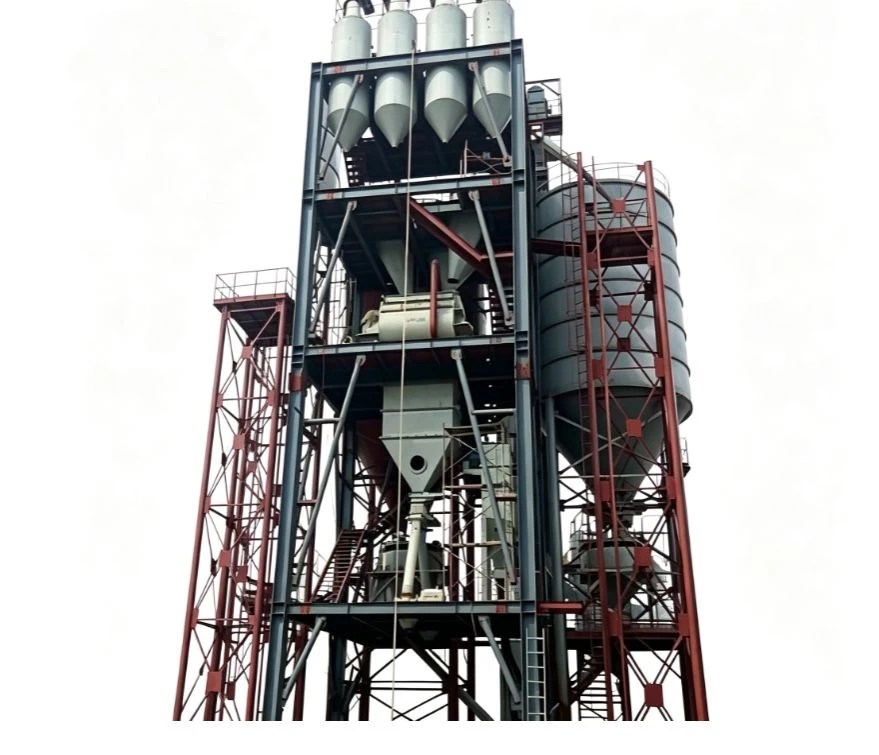
Material Traceability: Structural frames fabricated from Q355B low-alloy carbon steel with material mill test certificates (MTC) provided prior to fabrication.
Weld Inspection: Main pressure vessels, mixing troughs, and material silos subject to 100% visual weld inspection, supplemented by ultrasonic testing (UT) or magnetic particle testing (MT) on critical load-bearing seams.
Trial Assembly & Run-Test: Every production line undergoes a 72-hour mechanical dry-run test at our assembly facility to verify gearbox thermal stability, bearing alignment, and pneumatic gate response times.
Certifications: Manufacturing facilities operate under ISO 9001 Quality Management System, with electrical control panels bearing CE marking compliance.
Packaging & Shipping
Corrosion Protection
Machined shafts, paddle tips, and bare steel contact surfaces coated with anti-corrosion film and wrapped in VCI moisture-barrier sheeting.
Containerization
Bulk structural steel members and non-standard components loaded into Open-Top and High-Cube (HC) 40ft maritime containers. Silo shell segments shipped via flat-rack containers.
Component Marking
All electrical terminals, hydraulic hoses, and modular pipe sections stamped with alpha-numeric tags corresponding to the English P&ID and mechanical installation drawings.
Frequently Asked Questions

Request a Quote & Engineering Drawings
To receive a formal quotation, technical proposal, and downloadable CAD layout package tailored to your target capacity (t/h) and raw material specifications, please provide the following parameters to our technical engineering team:
Target Annual Output / Hourly Capacity
Available Factory Dimensions (Length x Width x Clear Height)
Raw Materials Utilized (e.g., local sand moisture, binder types)
Packaging Requirements (Valve bags, open-mouth bags, bulk silos)