


Air Classifiers
Product Overview
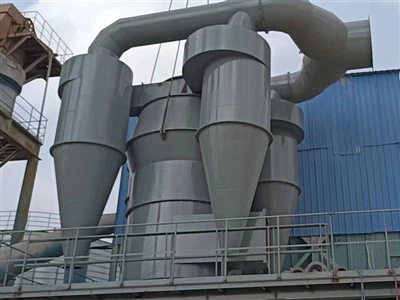
An industrial Air Classifier is a mechanical powder-processing machine that utilizes an adjustable internal centrifugal air vortex to separate dry, pulverized materials into distinct fine and coarse fractions. Integrated into closed-circuit grinding systems (with ball mills, roller mills, or hammer mills) or operated as standalone units, air classifiers deliver a sharp particle size cut, preventing over-grinding and ensuring precise particle size distribution (PSD) control down to the sub-micron level (d97 = 2 um to 75 um).
Engineered for continuous heavy-duty industrial operation, our classifiers handle bulk densities ranging from 0.2 t/m3 to 2.5 t/m3 across industries including fine chemicals, mineral processing, battery materials, and pharmaceuticals.

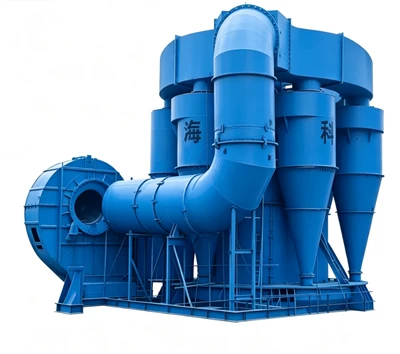
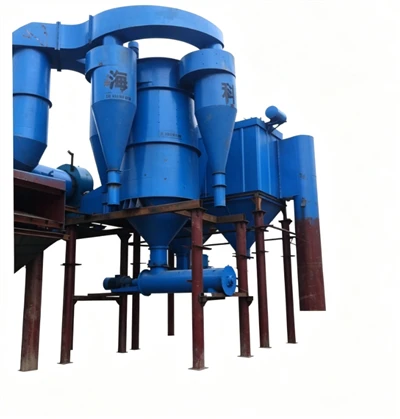
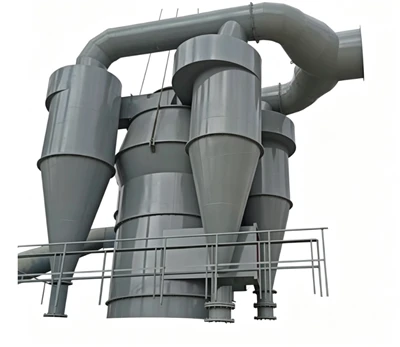


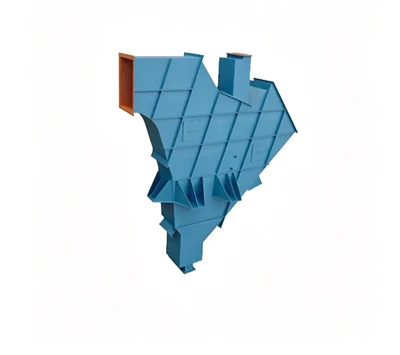



Sharp Cut Point Precision
High-speed dynamic classification rotor driven by an independent inverter-controlled motor enables precise tuning of the cut point (d50 / d97) with minimal coarse carryover in the fine fraction.
Low Specific Energy Consumption (SEC)
Optimized internal airflow aerodynamics reduce fluid turbulence and pressure drop, lowering overall kilowatt-hour-per-ton operating costs compared to legacy static classifiers.
Anti-Wear & Contamination Control
Internal contact surfaces can be lined with high-purity alumina ceramics (Al2O3 >= 92%), polyurethane, or Hardox wear-resistant steel, preventing iron contamination when processing abrasive minerals (e.g., quartz, silica).
Secondary Air Injection
Adjustable secondary air intake sweeps out entrapped fine particles from the coarse discharge stream, maximizing fine powder recovery yield.
Sealed Negative Pressure Operation
Fully welded casing structure operated under negative pressure prevents fugitive dust emissions, meeting strict environmental and workplace health standards.
Main Components
Classification Rotor (Turbine Wheel)
Vertically or horizontally mounted high-speed rotor balanced to G2.5 standard, designed with dynamically optimized blade geometry to generate a uniform centrifugal force field.
01
Classifier Housing & Scroll Casing
Heavy-gauge carbon steel or stainless steel structure engineered to withstand internal pressure differentials and abrasive material impact.
02
Main Drive & Variable Frequency Drive (VFD)
Heavy-duty industrial motor paired with a precision inverter for infinite rotor speed regulation (0 to 3000 RPM depending on model size).
03
Feed Inlet & Air Distribution Ring
Guarantees uniform feed dispersion and tangential air entry to eliminate dead zones inside the classification chamber.
04
Coarse and Fine Discharge Outlets
Engineered discharge ports integrated with rotary airlocks or double-flap valves to maintain system air balance.
05
Technical Specifications
|
Model Parameter |
AC-300 |
AC-600 |
AC-1000 |
AC-1500 |
|
Throughput Capacity (t/h) |
0.2 - 1.0 |
1.0 - 4.0 |
3.0 - 10.0 |
8.0 - 25.0 |
|
Cut Point Range (d97) (um) |
3 - 45 |
5 - 60 |
8 - 75 |
10 - 90 |
|
Rotor Speed Range (RPM) |
1000 - 3200 |
600 - 2200 |
400 - 1500 |
300 - 1000 |
|
Required Air Volume (m3/h) |
1500 - 3000 |
6000 - 12000 |
15000 - 28000 |
35000 - 65000 |
|
System Pressure Drop (kPa) |
1.5 - 2.5 |
2.0 - 3.5 |
2.5 - 4.0 |
3.0 - 4.5 |
|
Classifier Motor Power (kW) |
4.0 |
11.0 |
30.0 |
75.0 |
|
Standard Contact Material |
SS304 / Q235B |
SS304 / Hardox |
SS304 / Hardox |
Q235B + Ceramic Lining |
Applications
Mineral Processing & Aggregates
Processing calcium carbonate (CaCO3), talc, barite, graphite, quartz, mica, and bentonite to ultra-fine grades.
Battery Materials
Classification of lithium-ion battery precursor powders, anode graphite, and cathode materials requiring tight particle size distribution limits.
Chemicals & Pigments
Production of titanium dioxide (TiO2), resins, flame retardants, and specialty masterbatches.
Metallurgy & Abrasives
Sizing metal powders (iron, copper, aluminum) and abrasive grains (corundum, silicon carbide).
Multi-Wheel Classification (Multi-Stage): Dual-rotor or multi-rotor setups integrated into a single housing to simultaneously extract multiple fine cuts (e.g., separating both ultra-fines and coarse rejects in one pass).
Inert Gas Protection Loop (Nitrogen Sealing): Closed-loop nitrogen circulation configuration equipped with oxygen sensors and pressure relief venting for processing combustible organic powders or reactive metal dusts.
Cryogenic Cooling Integration: Liquid nitrogen injection ports designed for grinding and classifying heat-sensitive polymers, waxes, or low-melting-point chemicals.
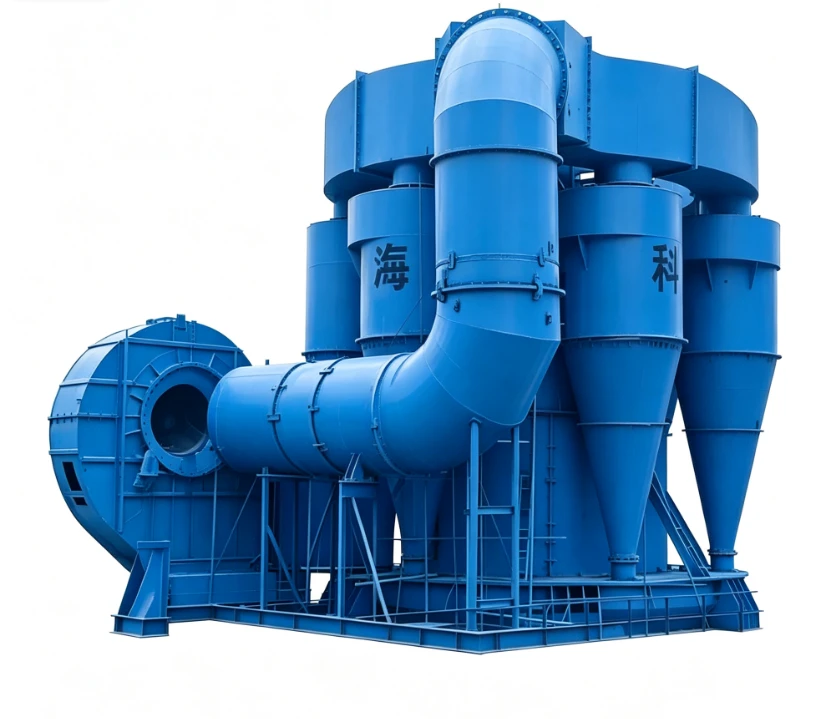
OEM & ODM Customization
Plant Layout Retrofitting
Custom inlet/outlet flange positioning and directional piping layouts designed to fit within existing brownfield plant floor constraints and headroom limits.
Material Upgrades
Full construction in specialized alloys including SS316L, Titanium, or Hastelloy for high-purity pharmaceutical or highly corrosive chemical environments.
Control System Integration
PLC control panels pre-programmed with Siemens, Allen-Bradley, or ABB architecture, supplied with PROFIBUS, Modbus, or Ethernet/IP communication protocols for SCADA integration.
Quality Control
Non-Destructive Testing (NDT): All pressure-retaining structural welds undergo ultrasonic testing (UT) and dye penetrant inspection (PT) in compliance with industrial pressure vessel standards.
Dynamic Rotor Balancing: Every classifier turbine rotor is individually balanced on computer-controlled dynamic balancing rigs to ISO 1940 Grade G2.5 specifications to eliminate vibration at high rotational speeds.
Dimensional & Material Verification: Positive Material Identification (PMI) testing conducted on all stainless steel and alloy plates; incoming raw material mill test certificates (MTCs) archived for traceability.
Factory Acceptance Testing (FAT): No-load running tests performed on all assembled units for a minimum of 4 hours to verify bearing temperature stability, acoustic emission levels, and inverter response.
Packaging & Shipping
Export-Grade Crating
Fumigation-free ISPM 15 certified wooden crates lined with moisture-barrier vacuum foil and desiccants for ocean transport.
Component Protection
Precision rotor assemblies and internal ceramic liners secured with rigid bracing and shock-absorbing mounts to prevent transit damage.
Documentation Package
Included with shipment: English Operation & Maintenance (O&M) manual, electrical schematic diagrams, PLC source code backup, FAT inspection reports, and mill test certificates.
Frequently Asked Questions

Request a Quote
To configure an air classifier tailored to your exact powder processing parameters, please provide our engineering team with the following details:
Material Name & Chemical Composition
Feed Size Distribution (d50 / d97) & Target Cut Point (d97)
Required Throughput Capacity (t/h)
Bulk Density & Moisture Content
Upstream/Downstream Equipment Constraints (Air volume, fan type, baghouse capacity)