Hey there! I'm a supplier of V-Type Air Classifiers, and today I want to chat about how the shape of particles can impact the classification process in a V-Type Air Classifier.
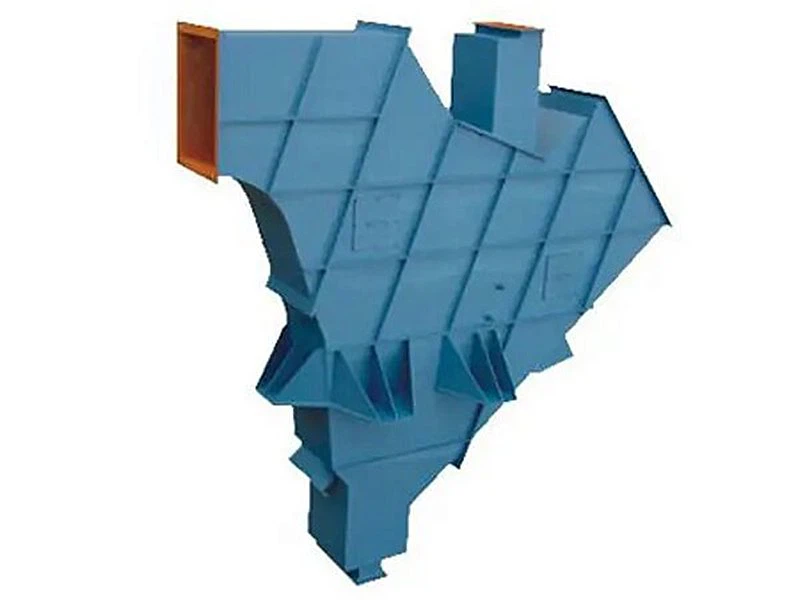
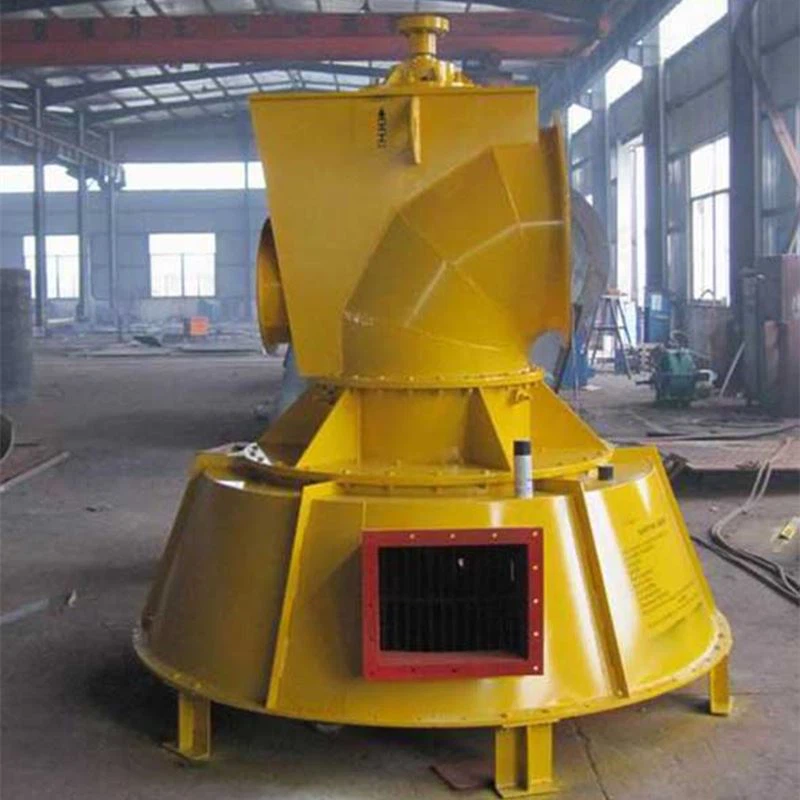
First off, let's quickly understand what a V-Type Air Classifier is. It's a piece of equipment used in industries like mining, cement, and chemical processing to separate particles based on their size and density. You can learn more about it on our V-Type Air Classifier page.
Now, when it comes to particles, their shape can play a huge role in how they behave inside the classifier. There are mainly three common particle shapes: spherical, irregular, and fibrous.
Spherical particles are the easiest to deal with in a V-Type Air Classifier. They have a uniform shape, which means they have a consistent surface area and mass distribution. This allows them to move through the air stream more predictably. When the air flow is introduced into the classifier, spherical particles tend to follow the air path without much deviation. Their smooth surface reduces the drag force acting on them, enabling them to be classified more accurately. For example, in a cement production plant, spherical cement particles can be easily separated into different size fractions, ensuring high - quality cement products.
On the other hand, irregularly shaped particles present a different story. These particles have uneven surfaces and varying mass distributions. When they enter the V-Type Air Classifier, they can tumble and rotate in unpredictable ways. The drag force acting on them is not consistent, as different parts of the particle experience different air resistance. This can lead to misclassification. Some irregular particles may be carried along with the fine - particle stream even though they are relatively large, or vice versa. In the mining industry, when classifying ores with irregularly shaped particles, it can be a challenge to achieve a precise separation.
Fibrous particles are yet another unique case. Their long and thin shape gives them special aerodynamic properties. Fibers tend to align themselves with the air flow. However, they can also get entangled with each other, forming clumps. These clumps can disrupt the normal classification process. In a textile waste recycling plant, for instance, when using a V-Type Air Classifier to separate different types of fibers, the entanglement of fibers can lead to inaccurate classification results.
The shape of particles also affects the efficiency of the V-Type Air Classifier. For spherical particles, the classifier can operate at a higher efficiency because the separation process is more straightforward. The air flow can easily carry the particles to their respective collection areas. But with irregular and fibrous particles, the classifier may need to operate at a slower speed or with a different air flow rate to achieve a reasonable classification result. This can increase the energy consumption and reduce the overall throughput of the classifier.
Let's talk about how we, as a V - Type Air Classifier supplier, address these particle - shape issues. We have developed advanced air flow control systems in our classifiers. These systems can be adjusted to accommodate different particle shapes. For example, when dealing with irregular particles, we can increase the turbulence of the air flow to prevent particles from clumping together and to ensure a more precise separation.
We also offer customization options for our V - Type Air Classifiers. If you are dealing with a specific type of particle, such as fibrous materials, we can modify the internal structure of the classifier, like adding special guides or grids to help align and separate the fibers more effectively.
In addition to the V - Type Air Classifier, we also have other types of air classifiers in our product line. Check out our Composite Air Classifier and Coal Mill Dynamic Air Classifier for more options.
If you're in an industry that requires particle classification and are facing challenges related to particle shape, we're here to help. Our team of experts can provide you with in - depth advice on which classifier is the best fit for your specific needs. Whether you're dealing with spherical, irregular, or fibrous particles, we have solutions to ensure accurate and efficient classification.
Don't hesitate to reach out to us if you're interested in purchasing a V - Type Air Classifier or any of our other air classification products. We're ready to have a detailed discussion with you about your requirements and help you find the perfect solution for your business.
References:
- Some research papers on the aerodynamics of particles in air classifiers.
- Industry case studies on the use of V - Type Air Classifiers in different sectors.