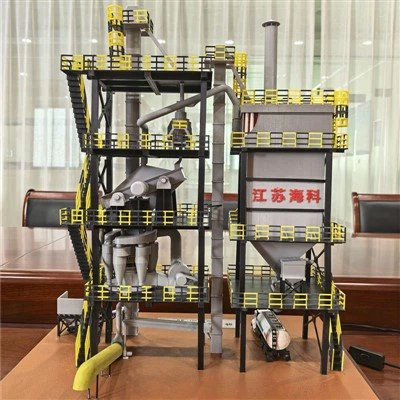
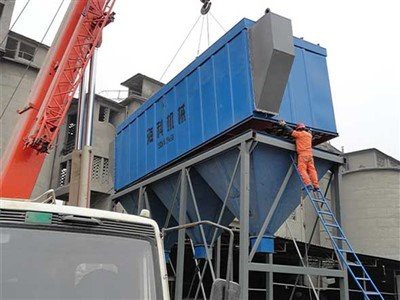
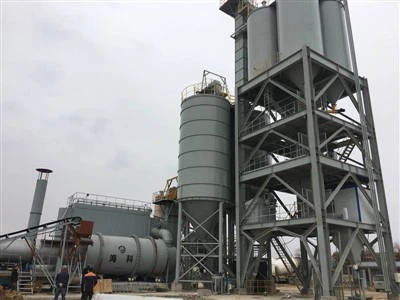
As a supplier of Composite Air Classifiers, I am often asked about the main components that make up these sophisticated machines. In this blog post, I will delve into the key elements of a Composite Air Classifier, explaining their functions and how they work together to achieve efficient particle separation.
Inlet and Feeding System
The inlet and feeding system is the starting point of the classification process. It is responsible for introducing the raw material into the classifier. The design of the inlet is crucial as it determines the initial distribution of the material within the classifier. A well - designed inlet ensures a uniform flow of particles, which is essential for accurate classification.
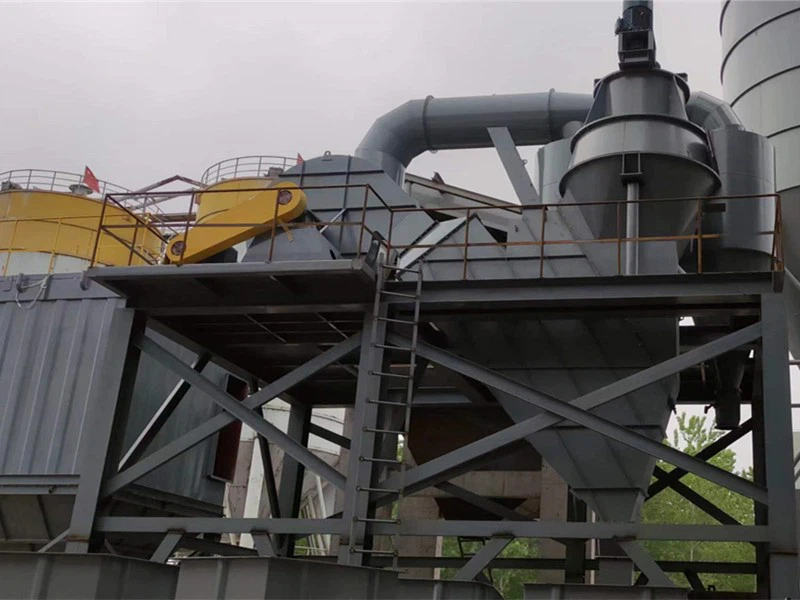
The feeding system can be of various types, such as screw feeders, belt feeders, or vibratory feeders. Screw feeders are commonly used due to their ability to control the flow rate precisely. They work by rotating a screw within a tube, pushing the material forward at a consistent speed. Belt feeders, on the other hand, are suitable for handling larger volumes of material. They use a conveyor belt to transport the material into the classifier. Vibratory feeders use vibration to move the material, providing a gentle and continuous feed.
Classification Chamber
The classification chamber is the heart of the Composite Air Classifier. It is where the actual separation of particles based on their size, shape, and density occurs. Inside the chamber, a high - velocity air stream is generated. This air stream carries the particles through the chamber, and as they move, the different forces acting on them cause the particles to separate.
The classification chamber is typically equipped with a series of vanes or blades. These vanes can be adjusted to control the direction and velocity of the air stream. By changing the angle of the vanes, the classifier can be optimized for different types of materials and classification requirements. For example, if a finer separation is needed, the vanes can be adjusted to create a more turbulent air flow, which helps in separating smaller particles.
Rotor Assembly
The rotor assembly is another critical component of the Composite Air Classifier. It consists of a rotor with a series of blades or paddles. The rotor rotates at a high speed, creating a centrifugal force that acts on the particles in the air stream. This centrifugal force causes the larger and heavier particles to move towards the outer edge of the rotor, while the smaller and lighter particles remain closer to the center.
The design of the rotor blades is important for efficient classification. The shape, size, and number of blades can affect the performance of the classifier. For instance, blades with a curved shape can create a more uniform air flow and better particle separation. The speed of the rotor can also be adjusted to control the classification efficiency. Higher rotor speeds generally result in finer particle separation.
Air Supply System
The air supply system is responsible for providing the high - velocity air stream required for the classification process. It typically consists of a fan or blower. The fan draws in air from the surroundings and accelerates it to the desired velocity. The air is then directed into the classification chamber.
The air supply system needs to be carefully designed to ensure a stable and consistent air flow. The size and power of the fan or blower depend on the size of the classifier and the volume of material to be processed. A well - designed air supply system can also help in reducing energy consumption and improving the overall efficiency of the classifier.
Collection System
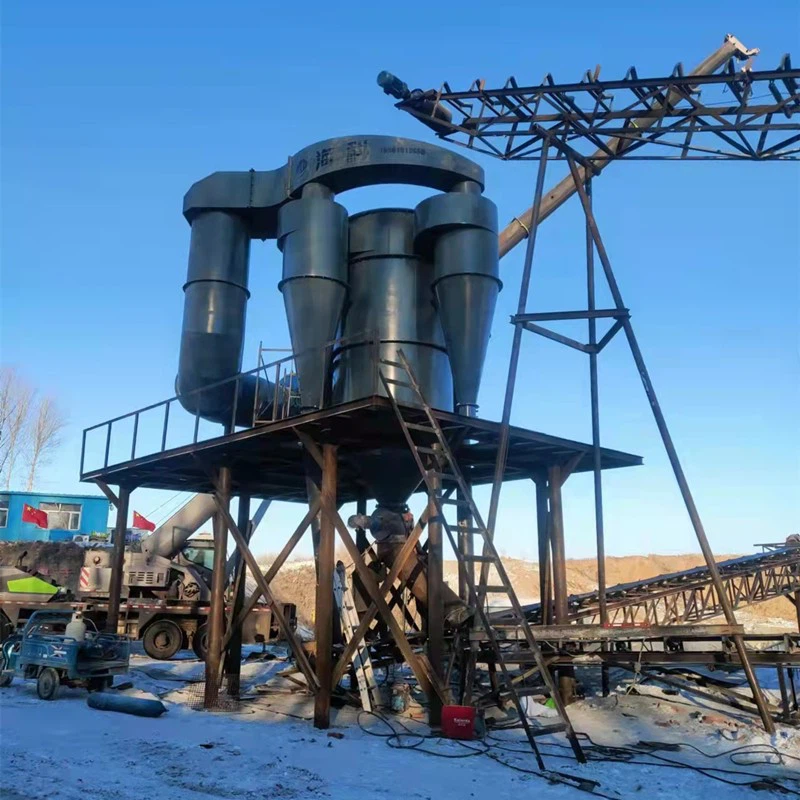
The collection system is used to collect the classified particles. It usually consists of cyclones and bag filters. Cyclones are used to separate the larger particles from the air stream. As the air - particle mixture enters the cyclone, the centrifugal force causes the particles to move towards the walls of the cyclone and fall into a collection hopper.
Bag filters are used to capture the finer particles that pass through the cyclone. The air passes through the filter bags, and the particles are trapped on the surface of the bags. Periodically, the bags are cleaned to remove the collected particles. The collection system is essential for ensuring that the classified particles are properly collected and that the air leaving the classifier is clean.
Control System
The control system is used to monitor and adjust the operation of the Composite Air Classifier. It includes sensors, controllers, and actuators. Sensors are used to measure various parameters such as air flow, temperature, and particle size. The controllers process the data from the sensors and send signals to the actuators to adjust the operation of the classifier.
For example, if the particle size of the classified product is not within the desired range, the control system can adjust the speed of the rotor, the angle of the vanes, or the air flow rate to improve the classification efficiency. The control system also provides safety features, such as over - speed protection and temperature monitoring, to ensure the reliable operation of the classifier.
Applications of Composite Air Classifiers
Composite Air Classifiers have a wide range of applications in various industries. In the mining industry, they are used to classify minerals such as coal, iron ore, and copper ore. For example, a Coal Mill Dynamic Air Classifier can be used to separate coal particles of different sizes, which is important for efficient combustion in power plants.
In the construction industry, Composite Air Classifiers are used for classifying sand and gravel. A Sand and Gravel Classifier can separate sand particles based on their size, which is crucial for producing high - quality concrete.
In the pharmaceutical and chemical industries, Composite Air Classifiers are used for particle size control in the production of powders and granules. A V - Type Air Classifier can be used to achieve a narrow particle size distribution, which is important for ensuring the quality and performance of the final product.
Conclusion
In conclusion, a Composite Air Classifier is a complex machine composed of several key components, each playing a vital role in the classification process. The inlet and feeding system ensures a uniform introduction of the raw material, the classification chamber provides the environment for particle separation, the rotor assembly uses centrifugal force to separate particles, the air supply system provides the necessary air flow, the collection system captures the classified particles, and the control system monitors and adjusts the operation of the classifier.
If you are in need of a high - quality Composite Air Classifier for your industry, we are here to help. Our team of experts can provide you with the right solution tailored to your specific requirements. Contact us to start a discussion about your procurement needs and explore how our Composite Air Classifiers can enhance your production process.
References
- Smith, J. (2018). Principles of Air Classification. Journal of Particle Technology, 25(3), 123 - 135.
- Johnson, A. (2019). Advances in Composite Air Classifier Design. International Journal of Mining and Mineral Processing, 32(2), 78 - 89.
- Brown, C. (2020). Applications of Air Classifiers in the Pharmaceutical Industry. Pharmaceutical Research, 45(6), 156 - 167.