

The typical lifespan of a hot blast furnace is between 8 and 15 years, but the actual service life is affected by multiple factors, including equipment quality, operating environment, maintenance, and operating methods. According to industry research and case studies, high-quality hot blast furnaces, with regular maintenance and a stable operating environment, can have a lifespan exceeding 15 years; however, if subjected to harsh conditions such as prolonged exposure to high temperature and humidity, corrosive gases, or frequent start-ups and shutdowns, their lifespan may be shortened to less than 8 years.
From a technical perspective, the lifespan of a hot blast furnace is closely related to the materials and manufacturing processes of its core components (such as burners, heat exchangers, and furnace bodies). For example, furnace bodies lined with high-temperature alloy steel or ceramic fiber can effectively resist thermal stress and corrosion, extending their service life; while the design of the burner (such as the fuel-air mixing ratio and ignition stability) directly affects equipment efficiency and component wear. Furthermore, the circulation method (internal or external circulation) and combustion method (e.g., electromagnetic heating, gas heating) of the hot air furnace also affect its lifespan. Electromagnetic heating, due to its lack of open flame and high thermal efficiency (up to 98%), reduces component thermal fatigue and is more conducive to extending lifespan compared to traditional combustion methods.
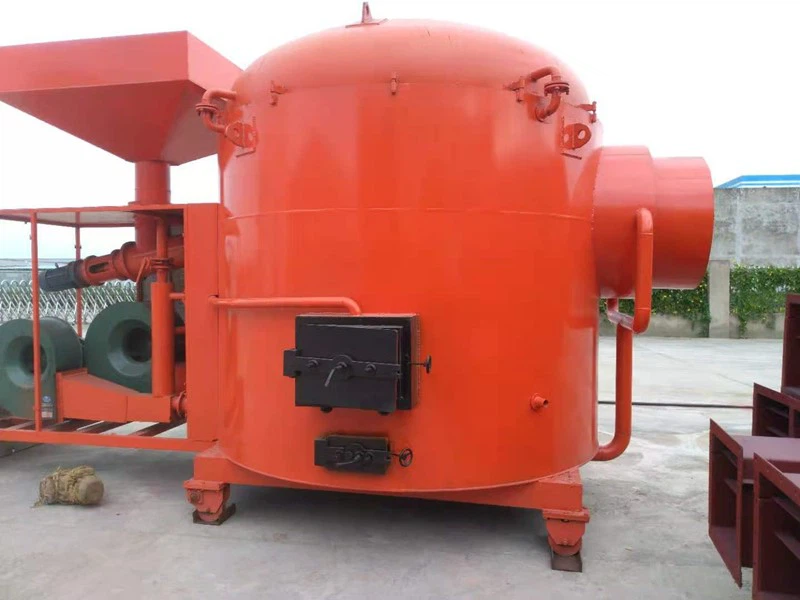
In terms of application scenarios, the requirements for hot air furnaces vary significantly depending on the application, such as agricultural greenhouse heating, industrial drying, and coal mine ventilation. For example, hot air furnaces used in coal mines need to be explosion-proof and operate 24 hours a day, requiring extremely high wear resistance of components; while hot air furnaces for greenhouse heating may have a longer lifespan due to seasonal use. Industry standards clearly define the energy efficiency rating and safety specifications (such as IP66 protection rating) for hot air furnaces; products that meet these standards generally have a more reliable lifespan.
Maintenance is a key factor determining the lifespan of a hot air furnace. Regularly cleaning accumulated ash, inspecting burner nozzles, and replacing aged seals can reduce equipment failure rates by more than 40%. Statistics show that hot blast stoves that are not properly maintained have an average lifespan that is 3 to 5 years shorter than those that are regularly maintained. Furthermore, operator training is crucial – incorrect operation (such as frequent start-ups and shutdowns, and overloading) accelerates component wear and shortens equipment lifespan.


