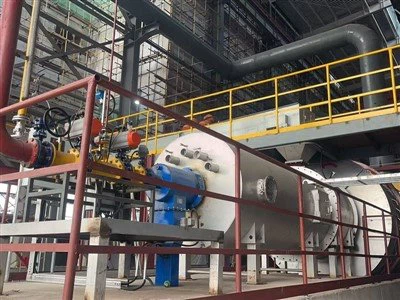
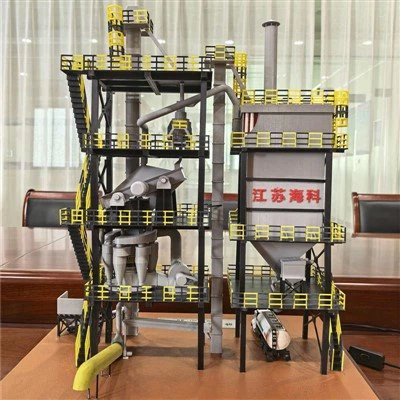
The dual-rotor air classifier is a critical piece of equipment in the field of powder processing, widely applied in industries such as cement, mining, and chemical engineering. It plays a crucial role in separating particles of different sizes and densities, ensuring the quality and performance of the final product. One of the key factors that can significantly influence the performance of a dual-rotor air classifier is the number of blades on the rotors. In this blog, as a dual-rotor air classifier supplier, I will delve into how the number of blades on the rotors affects the performance of a dual-rotor air classifier.
1. Basic Working Principle of Dual - Rotor Air Classifier
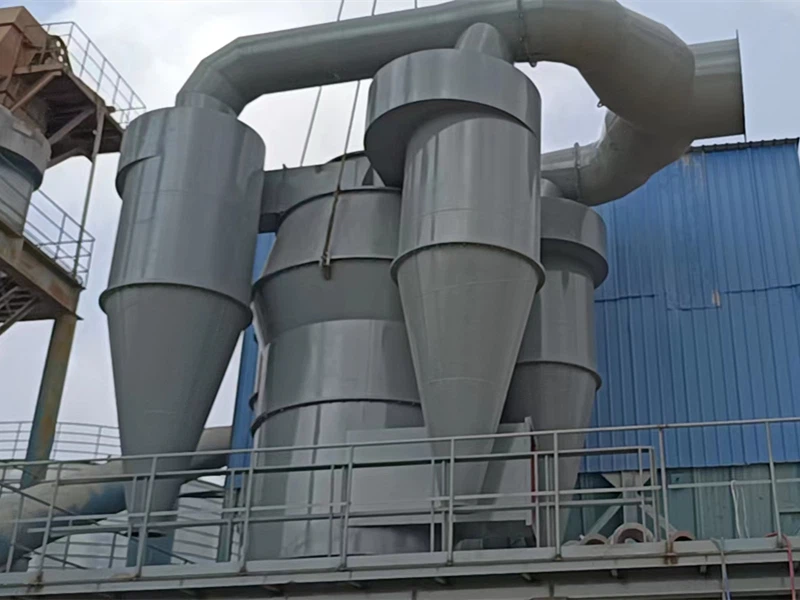
Before discussing the impact of the number of blades, it's essential to understand the basic working principle of a dual-rotor air classifier. The classifier consists of two rotors rotating in opposite directions. When the powder material is fed into the classifier, it is entrained by the airflow. The particles are then subjected to centrifugal force generated by the rotating rotors and the drag force of the airflow. Particles with different sizes and densities experience different forces, leading to their separation. Fine particles are carried by the airflow and collected as the product, while coarse particles are ejected from the classifier.

2. Influence of Blade Number on Classification Efficiency
2.1. Centrifugal Force and Classification Precision
The number of blades on the rotors directly affects the centrifugal force exerted on the particles. A larger number of blades means a more continuous and uniform distribution of the centrifugal field. When there are more blades, the particles are more likely to be evenly exposed to the centrifugal force, which enhances the classification precision. For example, in a cement production process, a dual-rotor air classifier with a sufficient number of blades can more accurately separate fine cement particles from coarse ones, ensuring the fineness and quality of the cement product.
On the other hand, if the number of blades is too small, the centrifugal field may be uneven, and some particles may not be effectively classified. This can result in a lower classification efficiency, as coarse particles may be mixed with fine particles in the product, reducing the overall quality of the separated material.
2.2. Airflow Distribution
The number of blades also influences the airflow distribution within the classifier. More blades can create a more complex and turbulent airflow pattern. This turbulent airflow can help to disperse the particles more effectively, preventing particle agglomeration and improving the classification efficiency. In the case of a Composite Air Classifier, a well - designed blade number can optimize the airflow distribution, ensuring that the particles are evenly distributed in the classification zone and increasing the probability of accurate separation.
However, an excessive number of blades may cause an increase in airflow resistance. This can lead to a decrease in the airflow velocity, which may affect the transportation of particles and reduce the classification capacity. Therefore, there is an optimal range for the number of blades to balance the airflow distribution and resistance.
3. Impact on Productivity
3.1. Throughput Capacity
The number of blades on the rotors has a significant impact on the throughput capacity of the dual-rotor air classifier. A proper number of blades can ensure a smooth and efficient flow of particles through the classifier. When the number of blades is appropriate, the particles can be quickly and effectively classified, allowing for a higher throughput. For instance, in a large - scale mining operation using a Fly Ash Air Classifier, an optimized blade number can increase the amount of fly ash that can be processed per unit time, improving the overall productivity of the system.
Conversely, if the number of blades is either too small or too large, it can limit the throughput capacity. A small number of blades may not provide enough centrifugal force to separate the particles efficiently, resulting in a backlog of unclassified particles. An excessive number of blades, as mentioned earlier, can increase the airflow resistance, slowing down the particle flow and reducing the throughput.
3.2. Energy Consumption
The relationship between the number of blades and energy consumption is also crucial. A larger number of blades generally requires more power to drive the rotors. This is because the increased number of blades increases the rotational inertia and the frictional forces within the classifier. However, a well - designed blade number can improve the classification efficiency, which may offset the increase in energy consumption to some extent.
For example, in a Triple - Separation Air Classifier, an appropriate number of blades can achieve a high - quality separation with relatively lower energy consumption compared to a classifier with an improper blade number. By optimizing the blade number, we can strike a balance between energy consumption and productivity, making the classifier more energy - efficient.
4. Considerations for Different Applications
4.1. Particle Size and Density
The optimal number of blades on the rotors depends on the characteristics of the particles to be classified. For fine particles with low density, a larger number of blades may be required to provide sufficient centrifugal force for accurate separation. In contrast, for coarse and dense particles, a relatively smaller number of blades may be sufficient, as they can be more easily separated by the centrifugal force.
For example, in the classification of ultrafine powder in the chemical industry, a dual - rotor air classifier with a large number of blades can better meet the requirements of high - precision classification. While in the classification of gravel in the construction industry, a classifier with fewer blades may be more suitable.
4.2. Industry Requirements
Different industries have different requirements for the performance of the dual - rotor air classifier. In the cement industry, the classification efficiency and product fineness are of utmost importance. Therefore, a classifier with an appropriate number of blades to ensure high - precision classification is preferred. In the food industry, where the product quality and hygiene are crucial, the blade number should be designed to prevent particle contamination and ensure a smooth flow of the material.
5. Conclusion and Call to Action
In conclusion, the number of blades on the rotors has a profound impact on the performance of a dual - rotor air classifier, including classification efficiency, productivity, and energy consumption. As a dual - rotor air classifier supplier, we understand the importance of optimizing the blade number to meet the specific needs of different applications. We have a team of experienced engineers who can design and customize the classifier according to your requirements, ensuring the best performance and cost - effectiveness.
If you are interested in our dual - rotor air classifiers or have any questions about the impact of blade number on classifier performance, please feel free to contact us for a detailed discussion and procurement negotiation. We are committed to providing you with high - quality products and professional services.
References
- Smith, J. (2018). Principles of Powder Processing. New York: Wiley.
- Johnson, A. (2019). Air Classification Technology in Industrial Applications. London: Elsevier.
- Brown, C. (2020). Optimization of Dual - Rotor Air Classifier Design. Journal of Powder Technology, 360, 234 - 245.